

TAIJI · MYTHOLOGY NOTES
Yìng Lóng: The Winged Lóng of Rain and War
Wings, rain and a battlefield caught between storm and drought. Meet Yìng Lóng, one of Chinese mythology’s most formidable lóng.
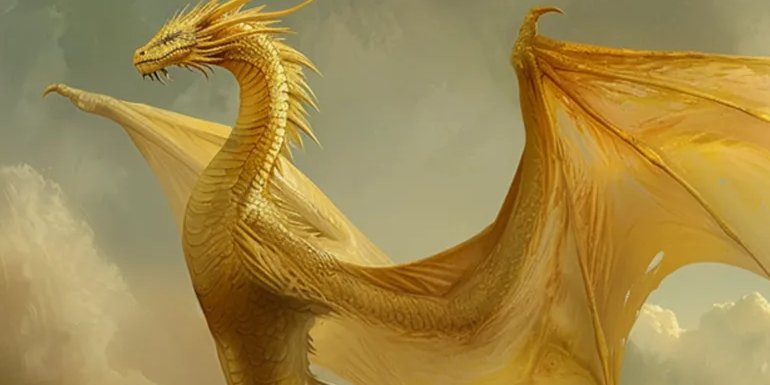
A lóng is already an impressive sight. Give one wings and command of water, then send him into a battle where both sides can change the weather, and you have Yìng Lóng.
Yìng Lóng (应龙) turns up where the stakes are high: in the war between Huáng Dì and Chī Yóu, in accounts of drought and rain, and in the tradition of Yǔ taming the floods.
The wings might be what catch your eye first. Water is what keeps drawing him into the story.
A lóng with wings
The familiar long-bodied lóng of Chinese art often travels through clouds without visible wings. Yìng Lóng belongs to a winged tradition: the Guǎngyǎ, quoted in the later Chūxuéjì, identifies a winged lóng as an yìnglóng. 1
That gives him a distinctive silhouette. In Taiji, you can see how the wings shape his presence on the Yìng Lóng card.
But a grand appearance is only the beginning. His place in the Shānhǎijīng is bound up with some of its most dangerous encounters.
When the battlefield becomes a weather system
Huáng Dì (黄帝), the Yellow Emperor, is at war with Chī Yóu (蚩尤). He sends Yìng Lóng to attack on the plain of Jìzhōu.
Yìng Lóng gathers water. Chī Yóu calls on the powers of wind and rain, unleashing a storm. Huáng Dì then brings down a heavenly woman, Bá (魃), whose presence stops the rain. Chī Yóu is defeated. 2
It’s an extraordinary escalation. Whatever the soldiers below might be carrying, the greater struggle is taking place in the air around them. Water, wind and heat have become weapons.
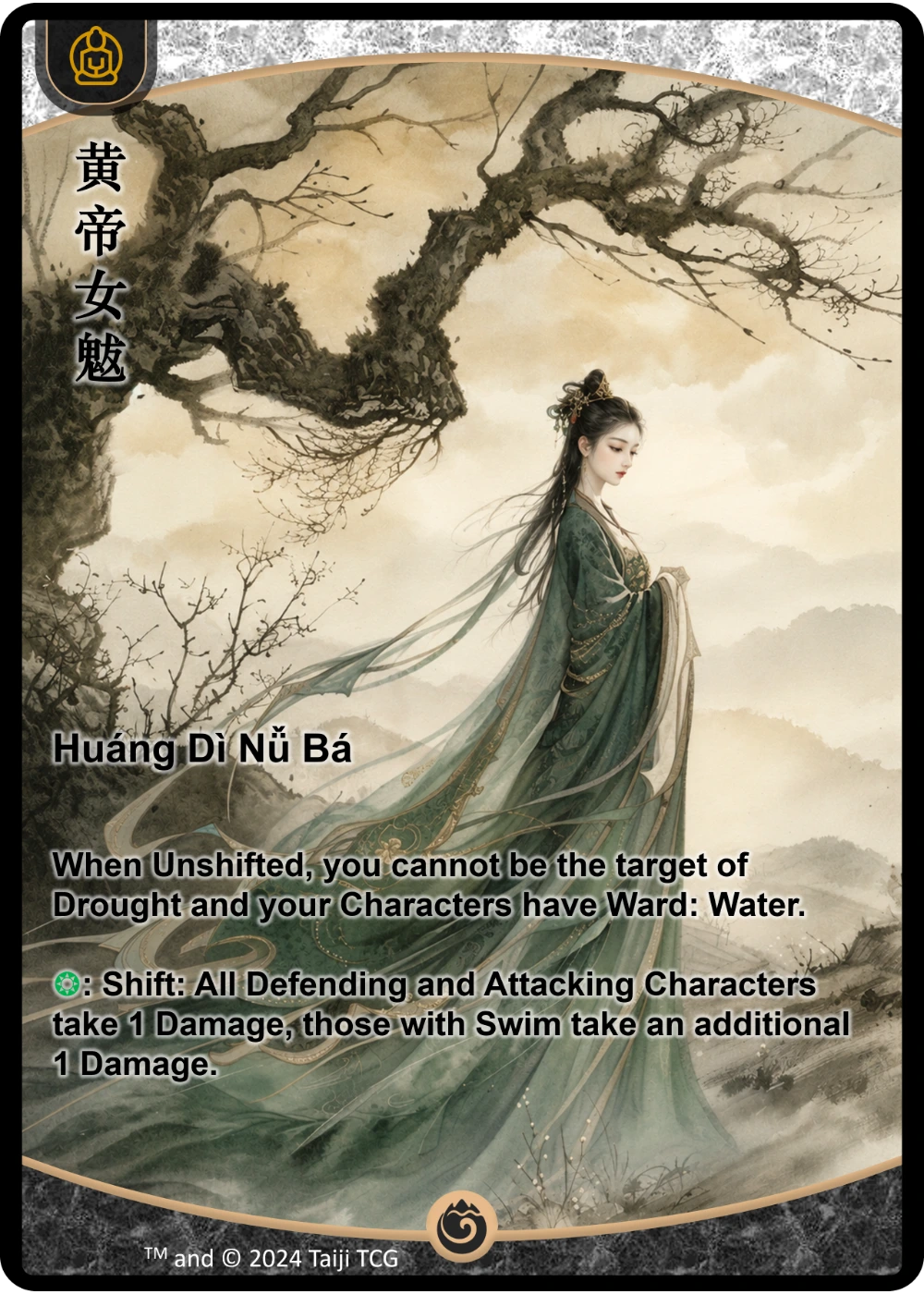
The victory also leaves a problem behind. Bá cannot return above, and wherever she stays, rain does not fall. The force that helped win the battle threatens the people living beneath it. You’ll find her in the catalogue as Huáng Dì Nǚ Bá. 2
The rain-bringer who cannot go back
Yìng Lóng has his own troubled aftermath.
The Great Wilderness East connects him with the deaths of Chī Yóu and Kuā Fù (夸父), then says he cannot return above. Drought follows, and people make his likeness in order to call for rain. 3
That is a striking change in his relationship with humans. On the battlefield, his power helps destroy an enemy. In a dry landscape, people need that same being to bring the water on which their lives depend.
Another passage places him in the south and associates his presence with its abundant rain. Whether people are desperate for water or surrounded by it, Yìng Lóng is part of how the landscape is understood. 2
If you know Kuā Fù as the giant who dies chasing the sun, the mention of Yìng Lóng killing him may surprise you. Both traditions survive. They give Kuā Fù different endings, rather than two scenes we need to squeeze into one death.
A tail that shows the flood a way out
Yìng Lóng also appears in the commentary tradition surrounding Yǔ (禹), the great controller of floods.
In Wáng Yì’s commentary on the Questions of Heaven, Yìng Lóng marks the ground with his tail, showing where the water should flow. Yǔ follows the route, opening a way for the floodwater to drain. 4
After storms used as weapons, this is a different kind of power. The land needs channels, and the water needs somewhere to go. The sweep of a vast tail becomes a guide across the landscape.
It is easy to see why the image appeals: a creature associated with water helps a human work out how to live with it.
More than a magnificent pair of wings
Yìng Lóng brings together things people need and things they fear. Rain makes crops grow. Too much water destroys homes. Drought can be as deadly as a storm.
That gives him a presence beyond the battlefield. His power touches the ordinary question of whether people will have enough water to survive.
Take another look at the Yìng Lóng card, then follow his appearances through Great Wilderness North and Great Wilderness East.
For a very different threat from above, there is always Hòu Yì and the ten suns.
Sources & further reading
ANOTHER PATH TO FOLLOW
Where next?
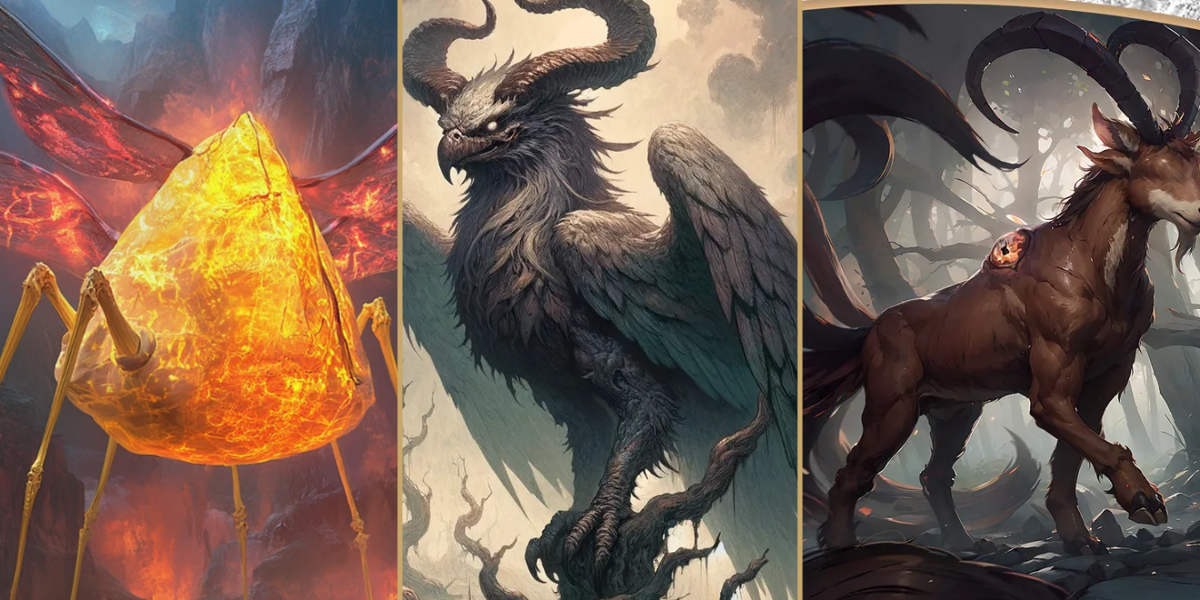
Five of the Strangest Beings in the Classic of Mountains and Seas
A faceless dancer, a predator that cries like a baby, and a nine-tailed goat. Meet five of the Shānhǎijīng’s more unusual inhabitants.
Read the article ↗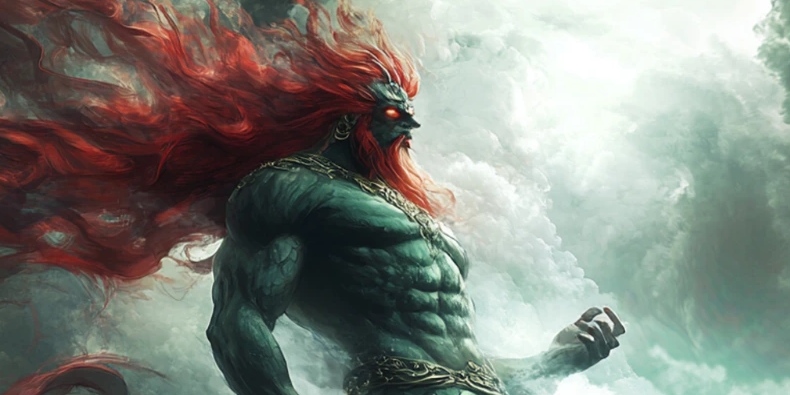
Chinese Creation Myths: Pán Gǔ, Nǚ Wā and the Origins of the World
A giant who becomes the landscape, a goddess who makes people from mud, and a sky that needs repairing. Chinese creation myths begin on quite a scale.
Read the article ↗
Hòu Yì and the Ten Suns: The Archer Who Saved the Earth
One sun gives life. Ten threaten to destroy it. Meet the divine family behind the suns and the archer who brings their heat under control.
Read the article ↗