

TAIJI · MYTHOLOGY NOTES
Chinese Creation Myths: Pán Gǔ, Nǚ Wā and the Origins of the World
A giant who becomes the landscape, a goddess who makes people from mud, and a sky that needs repairing. Chinese creation myths begin on quite a scale.
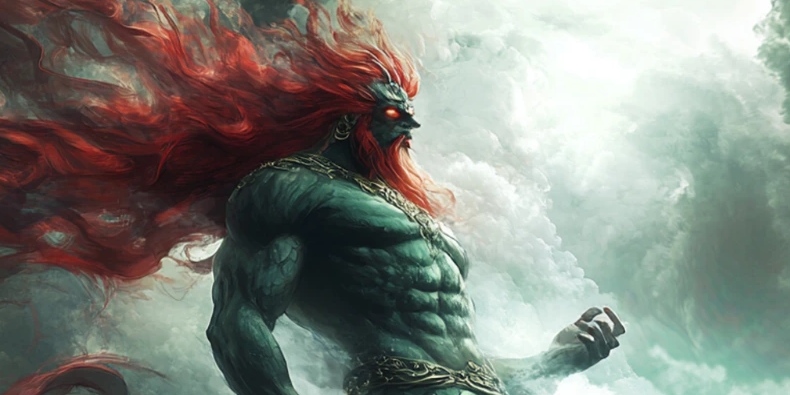
Imagine having to repair the sky.
The ground has split, fires are spreading, and floodwater is swallowing the places where people live. Somewhere above it all, the heavens are no longer doing their job. Nǚ Wā has a fairly serious problem on her hands.
Chinese creation myths give us scenes like this alongside giants, living earth and human beings shaped from mud. Pán Gǔ opens up the world; Nǚ Wā fills it with people and saves it from disaster. They belong to different storytelling traditions, but together they offer some memorable answers to a very old question: how did we get here?
Pán Gǔ: making room for a world
Before there are mountains or rivers, heaven and earth are mixed together like the contents of an egg. Inside is Pán Gǔ (盘古).
After eighteen thousand years, the two begin to separate. The clear, light part rises to become heaven; the heavy, murky part settles into earth. Pán Gǔ grows between them as the sky rises and the earth thickens. This continues for another eighteen thousand years.
It’s an enormous piece of work. Even the space we take for granted—the distance between the ground beneath us and the sky above—has to come into being.
In the tradition of Pán Gǔ’s bodily transformation, his death gives the world its features. His breath becomes wind and cloud, his voice thunder, and his blood rivers. His eyes become the sun and moon; his body becomes the land. 7
There’s something powerful about looking at a mountain and imagining it as part of a being who once stood between heaven and earth. The landscape becomes the remains of a life on an almost impossible scale. 1
Nǚ Wā gets her hands dirty
Having a world is one thing. Having anyone to live in it is another.
In the clay-creation story, Nǚ Wā (女娲) shapes people from yellow earth. But making an entire population by hand is slow work. She draws a cord through mud and lifts it, producing more people from the scattered mud.
It’s a wonderfully practical turn for a creation story. The task has become too large, so the goddess changes her method. Humanity begins with earth, effort and rather a lot of mess. 2
What do you use to mend heaven?
Nǚ Wā’s other great task begins with catastrophe. In the Huáinánzǐ, the supports of the world have failed. Fire and water run out of control, and dangerous creatures prey on people.
She melts five-coloured stones to patch the sky. She cuts the legs from a giant turtle to make new supports, defeats a black lóng, and uses reeds reduced to ash to stop the floodwater.
The materials are extraordinary, but the work feels physical: melting, cutting, propping things up and holding water back. Saving the world requires getting on with the repairs.
That’s part of Nǚ Wā’s appeal. Her connection with human life goes beyond bringing people into existence. When their world becomes uninhabitable, she intervenes again. 3
Gòng Gōng’s very bad way of losing an argument
Gòng Gōng (共工) brings a different energy to these stories.
In the Huáinánzǐ, he struggles with Zhuān Xū (颛顼) for power and strikes Bù Zhōu Mountain in anger. A pillar of heaven breaks, along with the bonds supporting the earth. The sky tilts towards the northwest, while the land sinks towards the southeast, explaining the movement of heavenly bodies and flowing water. 4
Many familiar retellings connect this disaster with Nǚ Wā’s repairs; some give Gòng Gōng a different opponent, Zhù Róng (祝融).
Whatever version you grew up with, smashing a mountain that holds up the sky is a spectacularly bad response to defeat. It also gives Nǚ Wā’s rescue a sharp contrast: one figure breaks the world in anger; another does the work of putting it back together.
Nǚ Wā’s strangest appearance
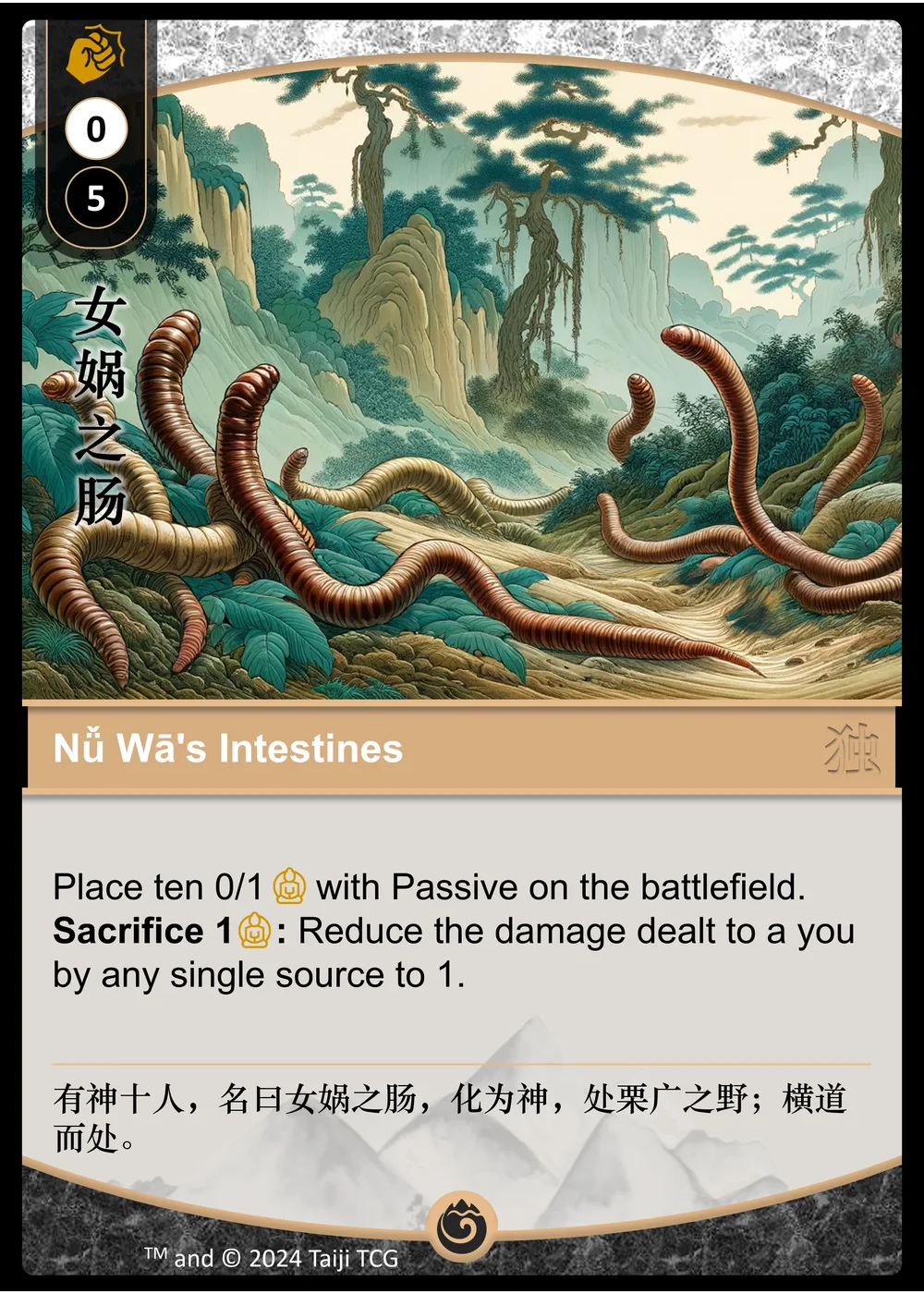
The Shānhǎijīng has a surprise for anyone who knows Nǚ Wā only through clay figures and coloured stones. In the Great Wilderness West, ten divine beings are identified with her intestines.
Yes, intestines.
That’s the tradition behind Nǚ Wā’s Intestines in Taiji. It’s a very different image of life emerging from a divine body, and a good reason to explore the Great Wilderness West for yourself. 5
A beginning without a giant
Chinese thought also asks how the world comes into being without placing a person at the centre of the story. The Dào Dé Jīng describes things emerging through the Dào and speaks of yīn, yáng and the qì through which they find harmony. 6
Yīn and yáng are interacting aspects of a changing world, rather than a contest between good and evil. Day gives way to night; warmth and coolness, movement and stillness all have their place.
That interest in balance runs through Taiji too. You can explore its use in the game through How to Play, or meet Hòu Tǔ (后土), another divine figure connected with the earth.
And if a broken sky sounds like a difficult problem, imagine waking up under ten suns. Hòu Yì has that one to deal with.
Sources & further reading
ANOTHER PATH TO FOLLOW
Where next?
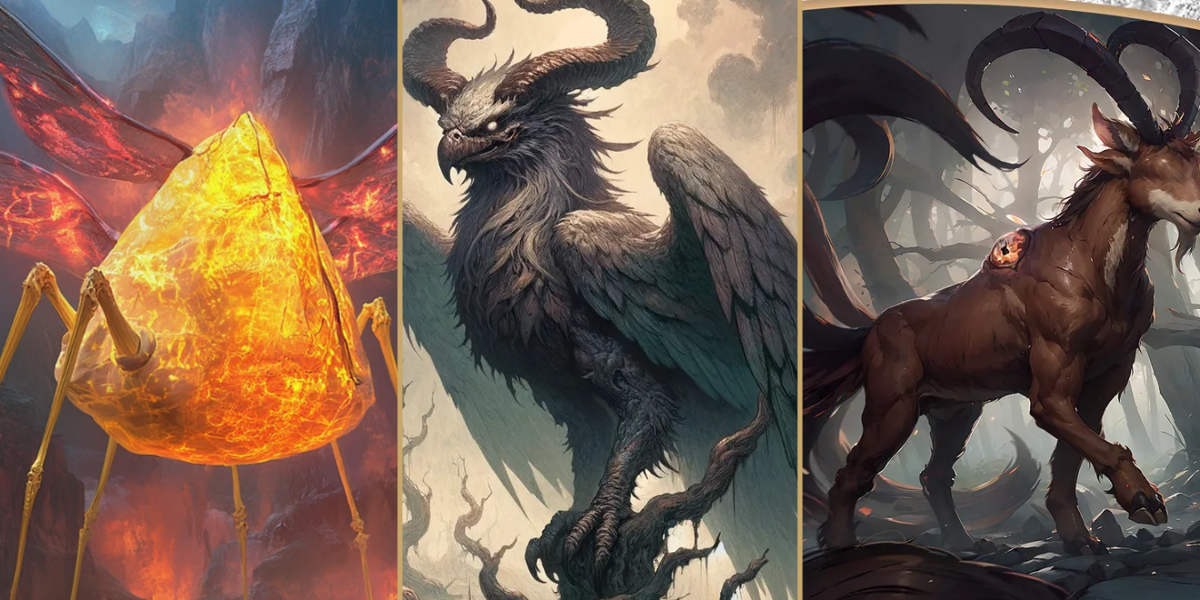
Five of the Strangest Beings in the Classic of Mountains and Seas
A faceless dancer, a predator that cries like a baby, and a nine-tailed goat. Meet five of the Shānhǎijīng’s more unusual inhabitants.
Read the article ↗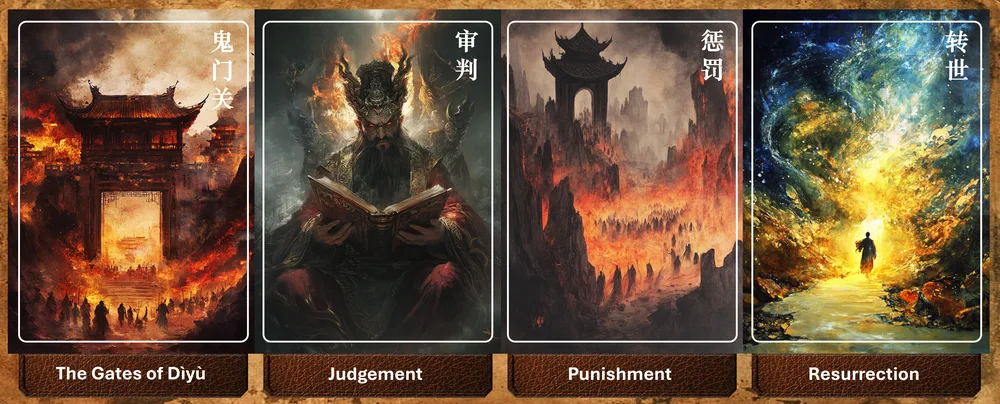
Dìyù and Rebirth in Chinese Buddhism: A Journey Through the Ten Courts
Judges, records, punishment and a drink that takes away your memories. Follow the journey through Dìyù—and the hope of another life beyond it.
Read the article ↗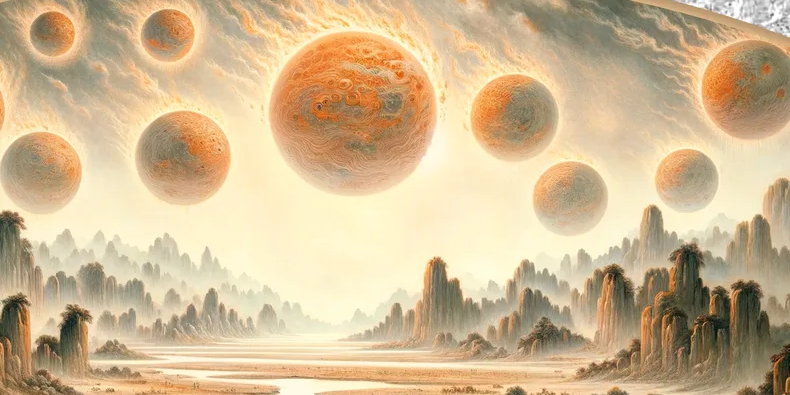
Hòu Yì and the Ten Suns: The Archer Who Saved the Earth
One sun gives life. Ten threaten to destroy it. Meet the divine family behind the suns and the archer who brings their heat under control.
Read the article ↗