

TAIJI · MYTHOLOGY NOTES
Dìyù and Rebirth in Chinese Buddhism: A Journey Through the Ten Courts
Judges, records, punishment and a drink that takes away your memories. Follow the journey through Dìyù—and the hope of another life beyond it.
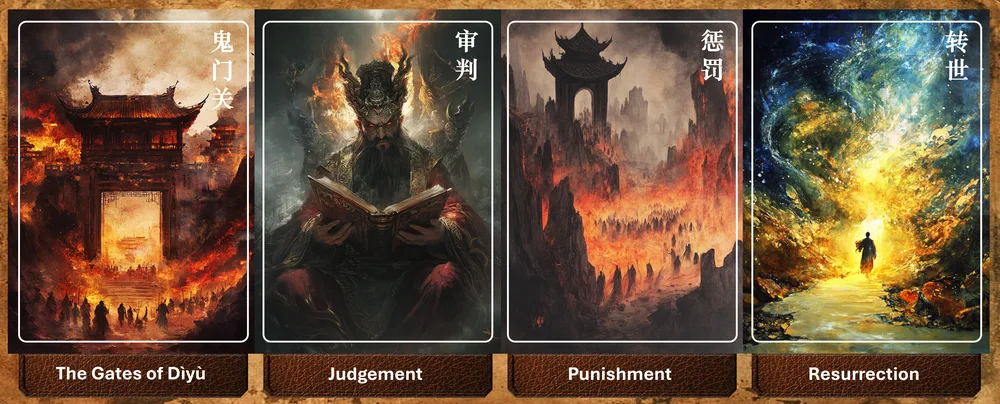
You arrive in the world of the dead, and someone has already opened your file.
There are officials, records and questions to answer. Things you thought nobody noticed have apparently been written down. Leaving your old life behind turns out to be rather more complicated than dying.
This is the setting of the Ten Courts of Dìyù (地狱), the Chinese underworld familiar from temple paintings and popular stories. Its judges and journeys bring Buddhist ideas about karma and rebirth together with Chinese religious traditions and the workings of an imperial courtroom. 1
Taiji’s Dìyù card gives that realm a place in the game. Here, we’ll follow the story beyond its gates.
First, what carries on after death?
In Buddhism, death does not usually end the process of becoming. Actions have consequences that help shape another birth. But there is no permanent, unchanging self simply packing its bags and moving into a new body.
That’s why rebirth is often a more useful word than reincarnation. There is continuity, without an eternal soul remaining exactly the same through every life. 2
Karma is closely tied to intention: what we deliberately do, say and think matters. The courtroom gives that idea a setting we can picture. A person has to face the effects of their conduct, including the things they would rather explain away. 3
Arriving with a record to answer for
In one traditional account, the local Earth God takes charge of the dead person and brings them before the City God, Chéng Huáng (城隍). Their record is checked before they are sent on to the underworld. 4
Imagine approaching a court where your reputation can no longer do the talking for you. The officials have their records. The guards are waiting. The question is what you actually did with your life.
The imagery would have been recognisable to people familiar with magistrates and local administration. Even death brings an encounter with officials, except these officials have access to evidence an earthly court might never uncover. 1
The ten courts
Each court has its own king. Yán Luó Wáng (阎罗王), the Chinese form of Yama, is the most famous, but in this scheme he presides over the fifth court.
Here is a common sequence. The dates show how the courts became connected with memorial observances for the dead. 5
| Court | Presiding king | Associated observance |
|---|---|---|
| 1 | Qín Guǎng Wáng · 秦广王 | Seventh day |
| 2 | Chǔ Jiāng Wáng · 楚江王 | Fourteenth day |
| 3 | Sòng Dì Wáng · 宋帝王 | Twenty-first day |
| 4 | Wǔ Guān Wáng · 五官王 | Twenty-eighth day |
| 5 | Yán Luó Wáng · 阎罗王 | Thirty-fifth day |
| 6 | Biàn Chéng Wáng · 卞城王 | Forty-second day |
| 7 | Tài Shān Wáng · 泰山王 | Forty-ninth day |
| 8 | Píng Děng Wáng · 平等王 | Hundredth day |
| 9 | Dū Shì Wáng · 都市王 | First anniversary |
| 10 | Zhuǎn Lún Wáng · 转轮王 | Second anniversary; the third year counted from death |
The first seven hearings make a weekly rhythm: seven days, then another seven, until forty-nine days have passed. Later observances extend remembrance beyond those first weeks. Local practices differ, so this is one familiar pattern rather than a timetable followed by every Buddhist community. 5, 6
What happens when your turn comes?
Paintings of the Ten Kings show rulers behind desks, with clerks and attendants close by. Elsewhere in the same scenes, guards carry out punishments. The contrast is chilling: the court proceeds with solemn order while suffering unfolds nearby. 6
An earlier Buddhist account, the Devadūta Sutta, gives Yama a particularly uncomfortable line of questioning. Did you see people grow old? Did you see illness? Did you see the dead? If you knew that life was fragile, why did you keep behaving as though your actions would never catch up with you? 7
The punishments in Buddhist hell imagery can be severe: blazing ground, heated metal and cauldrons, among other ordeals. Popular Chinese pictures also make consequences fit the offence. A dishonest merchant, for example, can be punished using the very measures he once manipulated. 1, 7
That specificity makes the warnings difficult to dismiss. Cruelty, deception and abuse of power acquire consequences that a visitor to a temple can see.
Is it ten courts or eighteen levels?
You’ve probably heard of the “eighteen levels of hell”. The phrase is familiar, but it doesn’t mean the Ten Courts are simply the first ten floors of one enormous building.
The courts organise judgment. The hell realms describe forms of suffering. Different texts and traditions arrange them in different ways, including hot and cold hells. Trying to squeeze them all into a single floor plan creates more confusion than it solves. 1, 8
Nor does forty-nine days mean every punishment is over in seven weeks. In Buddhist accounts, hell suffering can last for immense periods, but it remains impermanent. The relevant karma is eventually exhausted; another birth becomes possible. Leaving hell is still different from becoming enlightened. 7
The living haven’t been shut out
While the dead face this journey, families can still do something for them.
The Sūtra of the Original Vows of Kṣitigarbha Bodhisattva encourages good deeds for the departed during the forty-nine-day period. Recitation, offerings and acts of generosity become ways of directing care towards someone who has died. 8
For a grieving family, that gives remembrance a practical form. There is someone to help, a kindness to perform, a ritual to attend. Love continues through action even when ordinary conversation is no longer possible.
Dì Zàng: compassion reaches the underworld
Dì Zàng Pú Sà (地藏菩萨), or Kṣitigarbha, is devoted to helping suffering beings, including those in hell. His presence changes the emotional weight of the journey. Alongside judgment and fear, there is someone committed to helping beings out of suffering. 8
He is a bodhisattva, not another magistrate waiting to pronounce a sentence. The darkest part of the Buddhist cosmos is still a place where compassion can reach.
Mèng Pó’s final drink
Near the threshold of another life, popular stories introduce Mèng Pó (孟婆) and her drink of forgetting.
After all that scrutiny, after having a lifetime brought back before you, its memories are taken away. The next life begins without the familiar names, grudges and attachments of the last. Paintings in Reed College’s hell-scroll collection include this unsettling final step. 9
The cup raises a question that stays with you: if you could begin again, would you want to remember?
Mèng Pó belongs to the popular storytelling surrounding the underworld. Buddhist rebirth itself has a wider horizon, often described through six realms: gods, asuras, humans, animals, hungry ghosts and hell beings. Even a fortunate rebirth remains within the cycle; liberation means going beyond it. 8
The journey through Dìyù is frightening, but it leaves room for consequences to unfold, for help to matter and for existence to continue. You can revisit its imagery through the Dìyù card, then turn to a different question about beginnings in Chinese creation myths.
Sources & further reading
ANOTHER PATH TO FOLLOW
Where next?
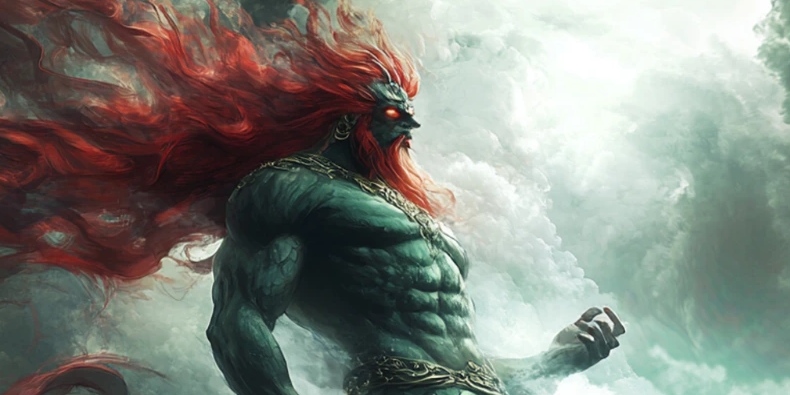
Chinese Creation Myths: Pán Gǔ, Nǚ Wā and the Origins of the World
A giant who becomes the landscape, a goddess who makes people from mud, and a sky that needs repairing. Chinese creation myths begin on quite a scale.
Read the article ↗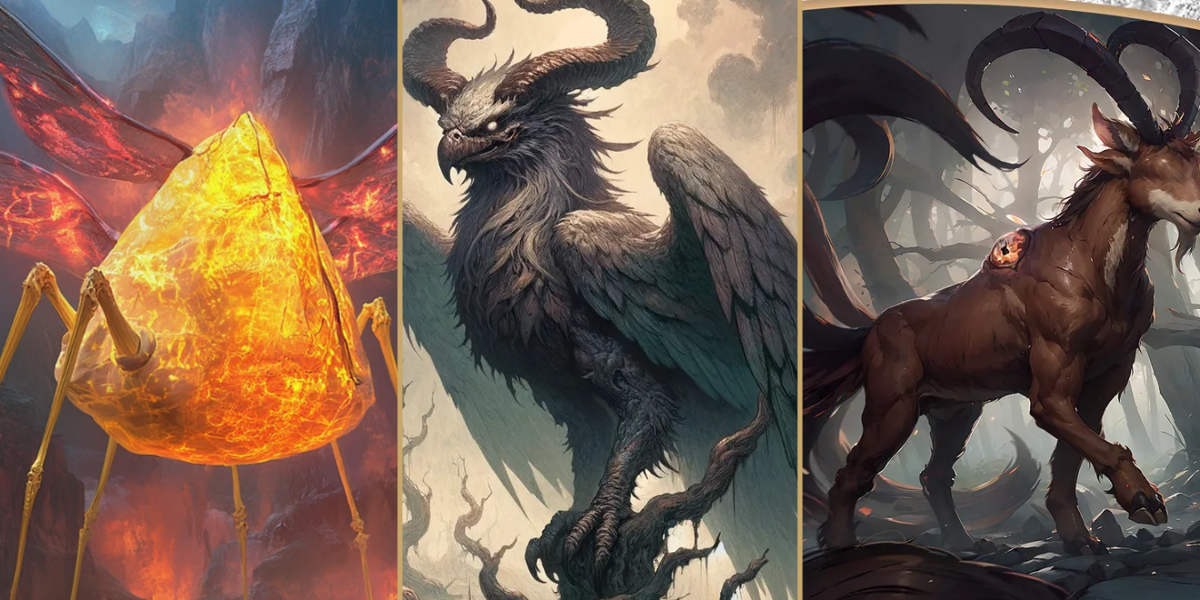
Five of the Strangest Beings in the Classic of Mountains and Seas
A faceless dancer, a predator that cries like a baby, and a nine-tailed goat. Meet five of the Shānhǎijīng’s more unusual inhabitants.
Read the article ↗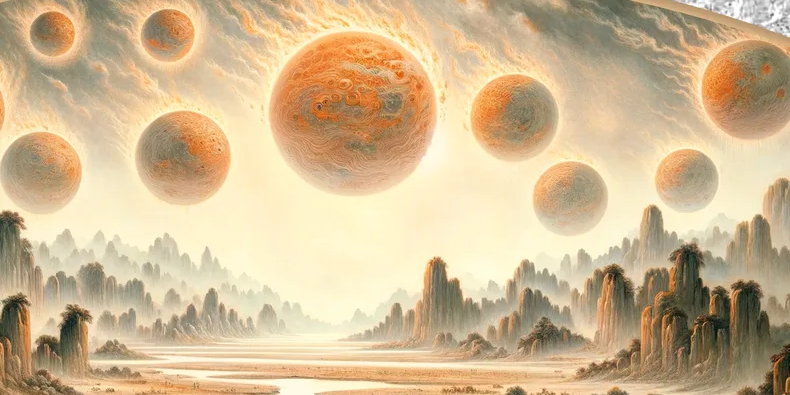
Hòu Yì and the Ten Suns: The Archer Who Saved the Earth
One sun gives life. Ten threaten to destroy it. Meet the divine family behind the suns and the archer who brings their heat under control.
Read the article ↗